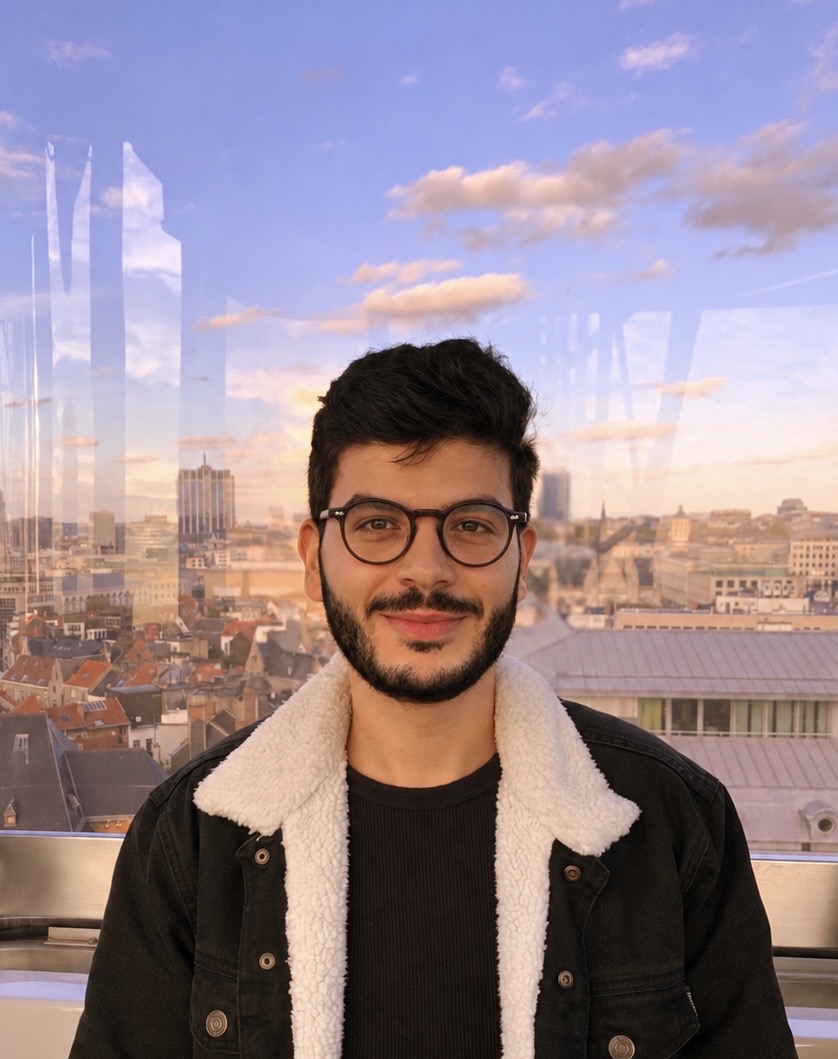
Portrait of Firas Gabetni

Firas Gabetni

PhD student · ENSTA, Institut Polytechnique de Paris

Lab
U2IS
Location
Palaiseau, France
Email
firas.gabetni@ensta-paris.fr

I am a PhD student in the U2IS lab at ENSTA, Institut Polytechnique de Paris, advised by Gianni Franchi and Goran Freshe. My research is on uncertainty quantification for deep networks, trying to make uncertainty estimates accurate, cheap enough to use at scale and reliable.

Most of my work is closley related to computer vision and i am quite interested in robust detection of AI generated media.

I also maintain open-source tools like Torch-Uncertainty among others with the goal of making most uncertainty quantification methods reproducible and easy to use.

Interests Uncertainty quantification · Computer vision

News

Publications

Figure for FakeParts

FakeParts: a New Family of AI-Generated DeepFakes

Ziyi Liu*, Firas Gabetni*, Awais Hussain Sani*, Xi Wang*, Soobash Daiboo, Gaëtan Brison, Gianni Franchi, Vicky Kalogeiton

NeurIPS 2026

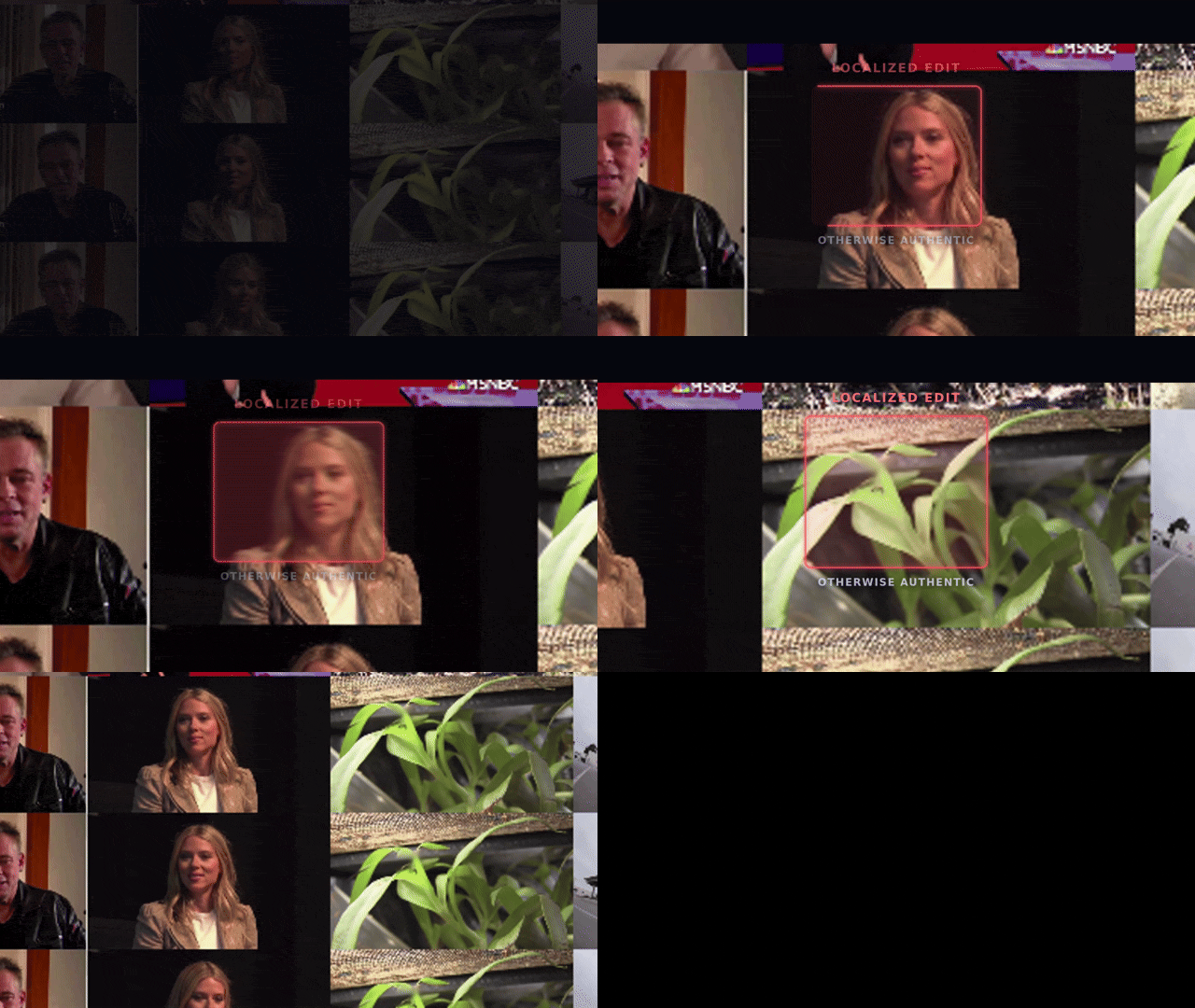
FakeParts are deepfakes with subtle, localized spatial or temporal manipulations of otherwise authentic videos. We present FakePartsBench over 81K videos (including 44K FakeParts) with pixel- and frame-level annotations and show they reduce human detection accuracy by up to 26% with similar degradation for sota detectors.
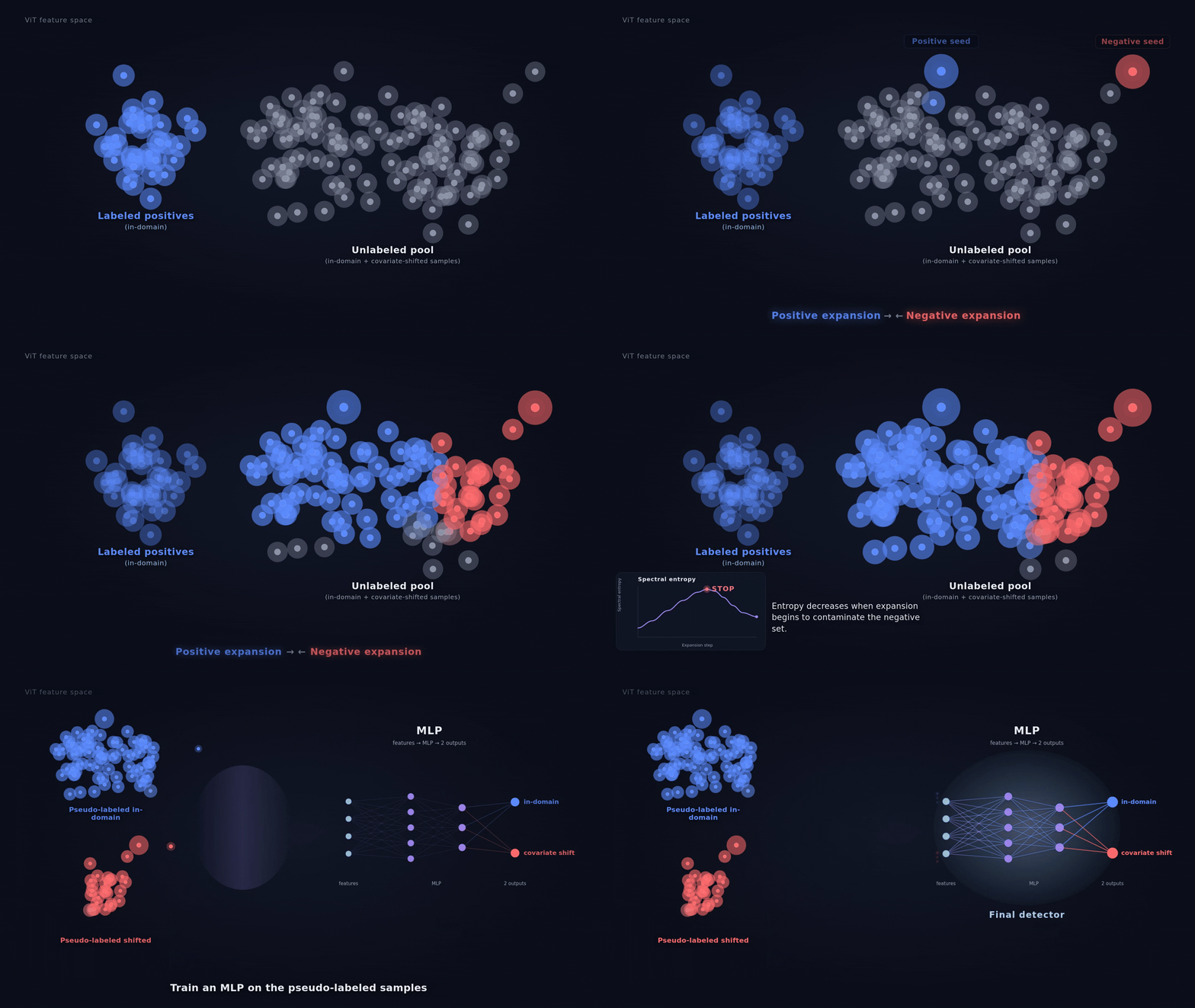

Figure for S-PUNA

From Local Geometry to Global Pseudo-Labeling for Robust Positive–Unlabeled Learning under Covariate Shift

Firas Gabetni, Alexandre Rocchi-Henry, Nacim Belkhir, Ziyi Liu, Gianni Franchi

ECCV 2026

Detecting covariate shift without supervision remains a challenging problem. We address this through Positive–Unlabeled learning and introduce S-PUNA, a geometry-aware framework that progressively identifies shifted data by leveraging the local manifold structure of visual features.

Figure for Hydra Ensembles

Ensembling Pruned Attention Heads For Uncertainty-Aware Efficient Transformers

Firas Gabetni*, Giuseppe Curci*, Andrea Pilzer, Subhankar Roy, Elisa Ricci, Gianni Franchi

ICLR 2026

Deep Ensembles achieve strong uncertainty quantification but are costly to scale to large models. Hydra Ensembles prunes attention heads to create diverse members and merges them via multi head attention with grouped fully connected layers yielding near single model inference speed while matching or surpassing Deep Ensembles without retraining from scratch.

Figure for Torch-Uncertainty

Torch-Uncertainty: A Deep Learning Framework for Uncertainty Quantification

Adrien Lafage*, Olivier Laurent*, Firas Gabetni*, Gianni Franchi

NeurIPS 2025 Spotlight

Torch-Uncertainty is a framework built on top of PyTorch and Lightning that streamlines training and evaluation with UQ techniques and metrics, and benchmarks a diverse set of methods across classification, segmentation, and regression.

* Equal contribution

Teaching

  • 2024-Present

    Advanced Computer Vision and Deep Learning

    Teaching assistant, ENSTA / Data AI Master

  • Fall 2025

    Theoretical foundations of deep learning

    Teaching assistant, MVA Master